
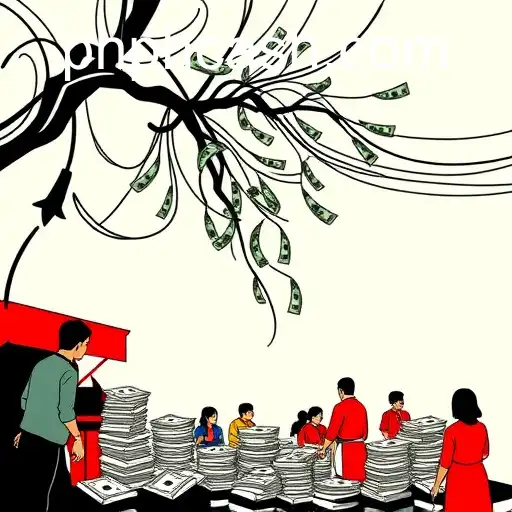
PHCASH | Jueteng: The Intricate Web of Illegal Gambling in the Philippines
PHCASH’s This article delves deep into the intricacies of Jueteng, an illegal numbers game entrenched in Philippine society, exploring its impact and connection to economic and social issues.
The Intricate World of Jueteng
In the Philippines, Jueteng remains a topic of considerable discourse, embroiling public figures, ordinary citizens, and institutions in controversy. Despite its unlawful status, Jueteng thrives in many Philippine communities, acting both as a social pastime and a financial burden. The keyword PHCASH often arises in discussions about the economic implications of such gambling activities, symbolizing the exchange of money and social capital within this clandestine industry.
Understanding Jueteng
Jueteng is a numbers game of chance, similar to the lottery but conducted illegally without government intervention. It functions through a network comprising a corrupt syndicate of bet collectors, local financiers, and corrupt political figures, who exploit the vulnerabilities of the poor. For many, participation in Jueteng is an act of optimism against financial hardship, hoping small bets will yield substantial returns.
Though the game’s origins remain shrouded in mystery, most historians trace Jueteng back to Spanish colonial rule. The name itself is believed to derive from the Spanish word 'huego' (game) and the Hokkien word 'teng' (stand), reflecting the cultural intermingling in Philippine society. Over the decades, Jueteng has evolved, characterized by its operational sophistication and deep societal integration.GOGOJILI
Jueteng's Financial Ecosystem and PHCASH
The operational framework of Jueteng is intricate. At its core, the financial operations rely heavily on the circulation of cash, making PHCASH a relevant term in discussions of its fiscal landscape. The collector, often working door-to-door, forms the game’s frontline, amassing bets from hopeful participants to pass up the chain.
Above the collectors are area managers, sometimes referred to as 'cobrador', who track both numbers and payouts, ensuring the accuracy of the operations. At the summit are financiers who ensure that winnings are paid out, underlining the dangerous yet organized nature of Jueteng’s monetary flows.
The allure of Jueteng's cash prizes has a powerful hold on communities. With no formal banking involved, PHCASH symbolizes the liquidity and immediacy sought by gamblers, contrasting starkly with bureaucratic financial systems. However, this financial fluidity is undermined by its illegality, risking both loss and legal consequence for all involved.
Social Implications
Jueteng is deeply woven into the social fabric, representing more than just a gambling endeavor. It reveals societal attitudes towards economic disparity and trust. The game fosters a temporary escape from economic hardships, and for many, it represents a sliver of hope in environments peppered with uncertainty.
The extensive participation of local populations can lead to community normalization of illegal activities, making efforts against its existence increasingly challenging. Jueteng's prevalence amongst lower-income populations further fuels debates on the role of socio-economic conditions in illicit activities, where individuals resort to gambling as a means of financial stability.
Political Implications
Politically, Jueteng presents a dilemma wherein its inconvenience intertwines with potential governmental corruption. The monetary influence of the game can enable certain political figures to leverage powers of patronage, tainting the democratic processes with allegations of election rigging and misconduct.
It is not uncommon for political candidacies to be marred by associations with Jueteng syndicates, revealing a facet of the power dynamic rife with bribery and favoritism. Measures to curb Jueteng pose significant political risks, challenging those in power to reflect a commitment to law enforcement over profit-driven motives.63php
Challenges in Combatting Jueteng
Efforts to combat Jueteng have been sporadic, with varying degrees of success. Law enforcement faces significant obstacles, hindered by the game’s deep-rooted networks and the necessity of community cooperation. More often than not, raids and arrests lead to temporary disruptions, barely scratching the systemic surface.EXTREME88
The pervasive presence of Jueteng alludes to inadequacies within legislative measures and the complexities of enforcing existing laws. The thin line between enforcement and corruption exacerbates the challenges faced, demanding more innovative solutions from policymakers and law enforcers.
The Role of PHCASH in Regulation and Solutions
Understanding PHCASH's role is crucial in strategizing effective solutions. As a representation of economic exchange within Jueteng, targeting PHCASH flows could unravel operational secrecy. Policy frameworks that offer transparent and legal alternatives mimic the communal allure Jueteng provides. Such efforts must address economic disparities, incentivizing legal cooperation amongst relevant stakeholders.
The path towards a solution requires community engagement, viable economic opportunities, and stringent law enforcement. Precision in understanding the socio-economic attraction of Jueteng is pivotal, ensuring the crafting of alternatives that match, if not exceed, the game’s illicit allure.
Conclusion
Jueteng continues to hold sway over numerous aspects of Philippine life, from economic implications symbolized by PHCASH to societal norms and political landscapes. Writing its narrative requires collective action, conscious of the very real needs of those entangled in its game of chance, demonstrating that beneath the numbers lies a tapestry of human hopes and societal challenges.82JL
82JL